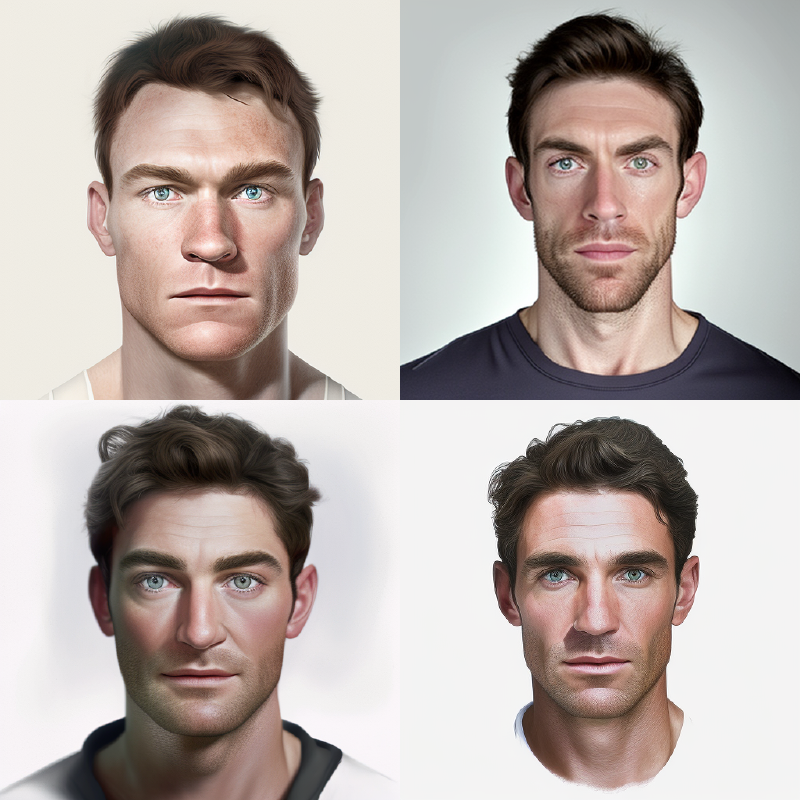
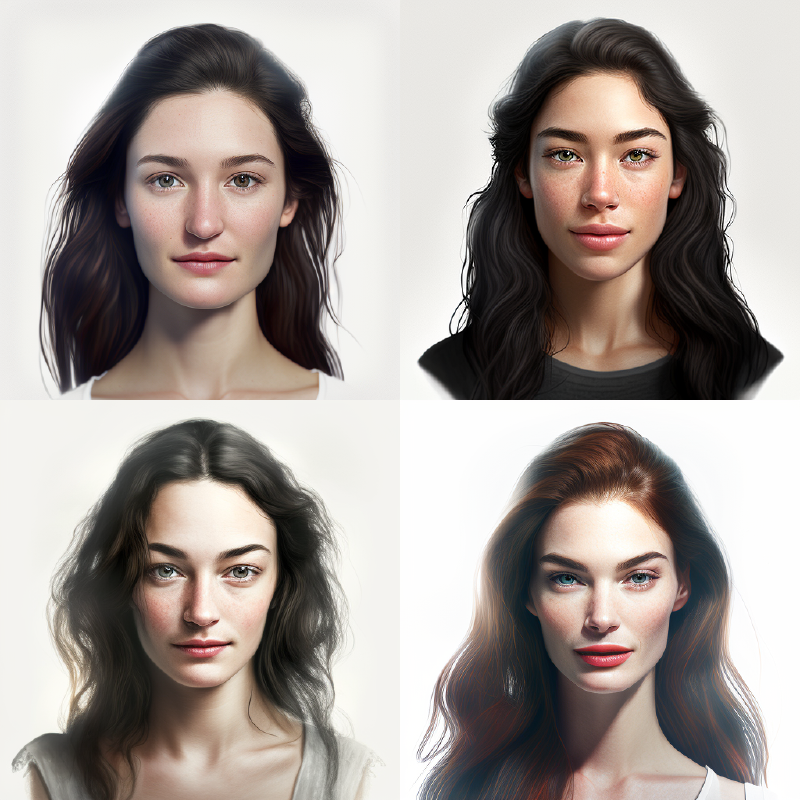
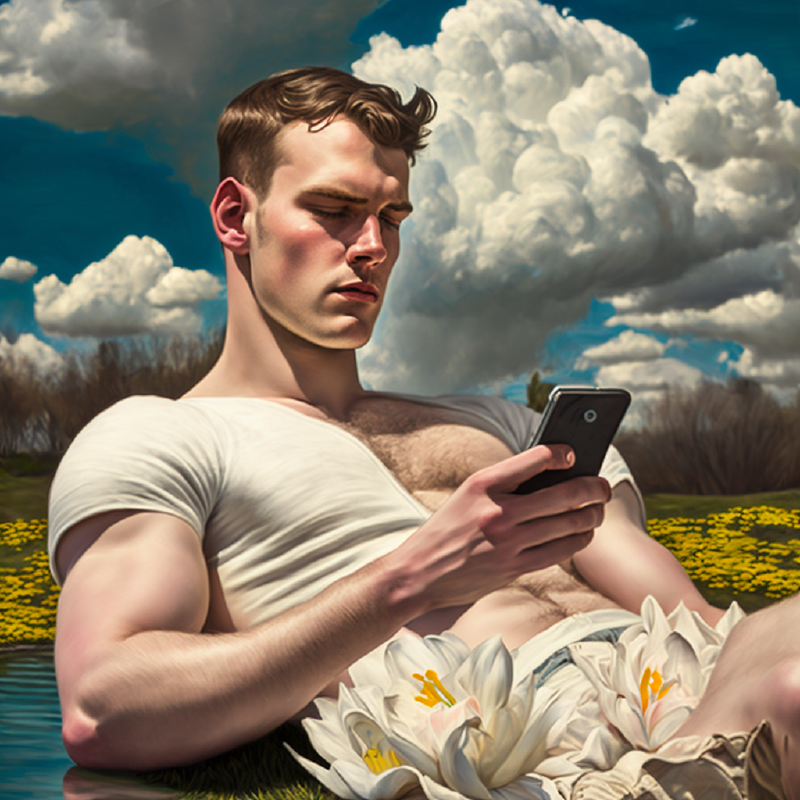
In a recent story, I explored what the MidJourney Artificial Intelligence image generator thought about male beauty. Several readers have commented to me that MidJourney seems to favor “Caucasian” faces as well as those most people would consider “very attractive” or “male models”.
In order to counter that, you can use prompts that include terms like “plain looking”, “average looking”, “ugly”, or even “quirky”. You can add racial diversity by explicitly giving a race, ethnicity, or region in your prompt. But it seems difficult to veer too far from what our modern sensibility would deem to be exceptional looking men.
So, I wondered if using a date range — into the pre-internet era, would have training data that would skew more toward a more typical male appearance.
Experiment Design
As a base line, let’s look at “average looking man, blank background”
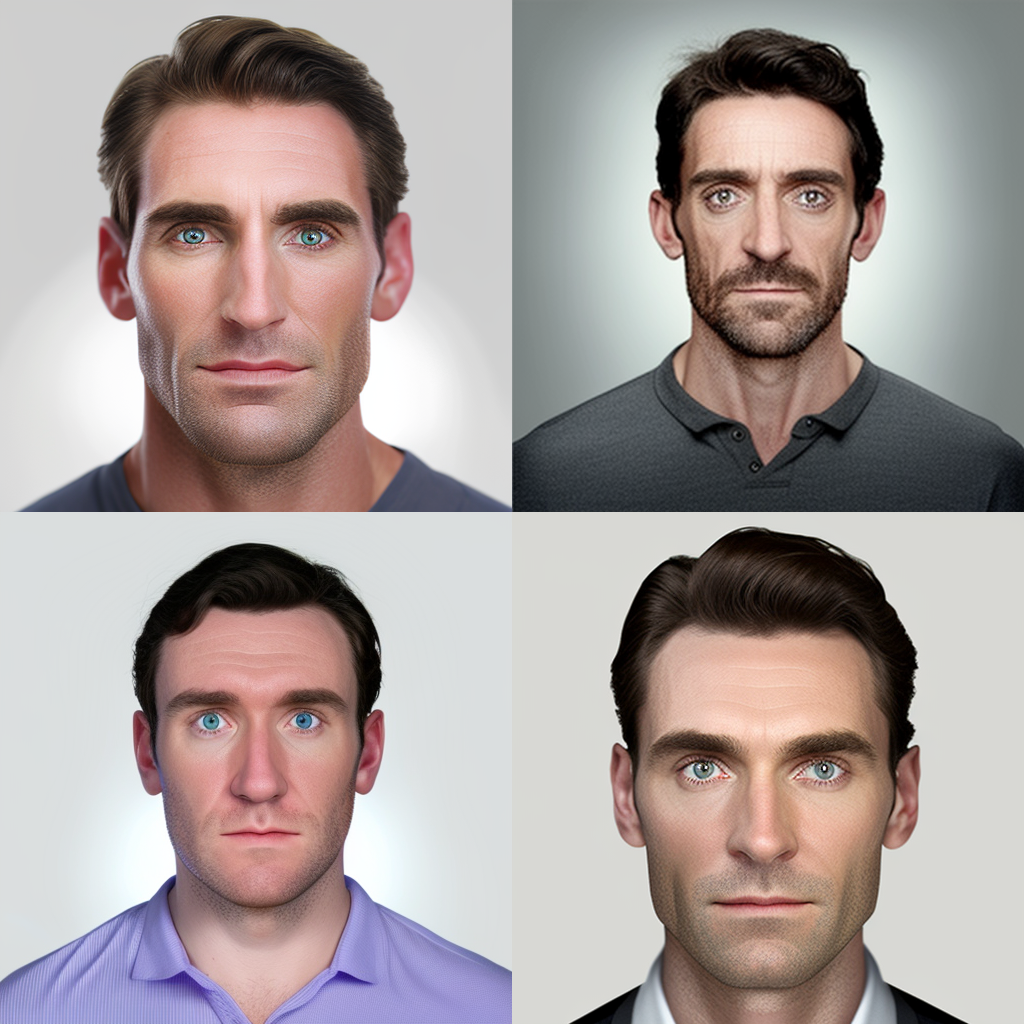
Average looking man (contemporary)
I may have gotten a “blank stare” because of my use of the term “blank” in the prompt. Oh, well.
For my experimental images, I used prompts like:
average looking man, 1990s photograph
to try to pin down a year. So, join me as we travel back in time to see what MidJourney thinks about men of each (pre-Internet) era.
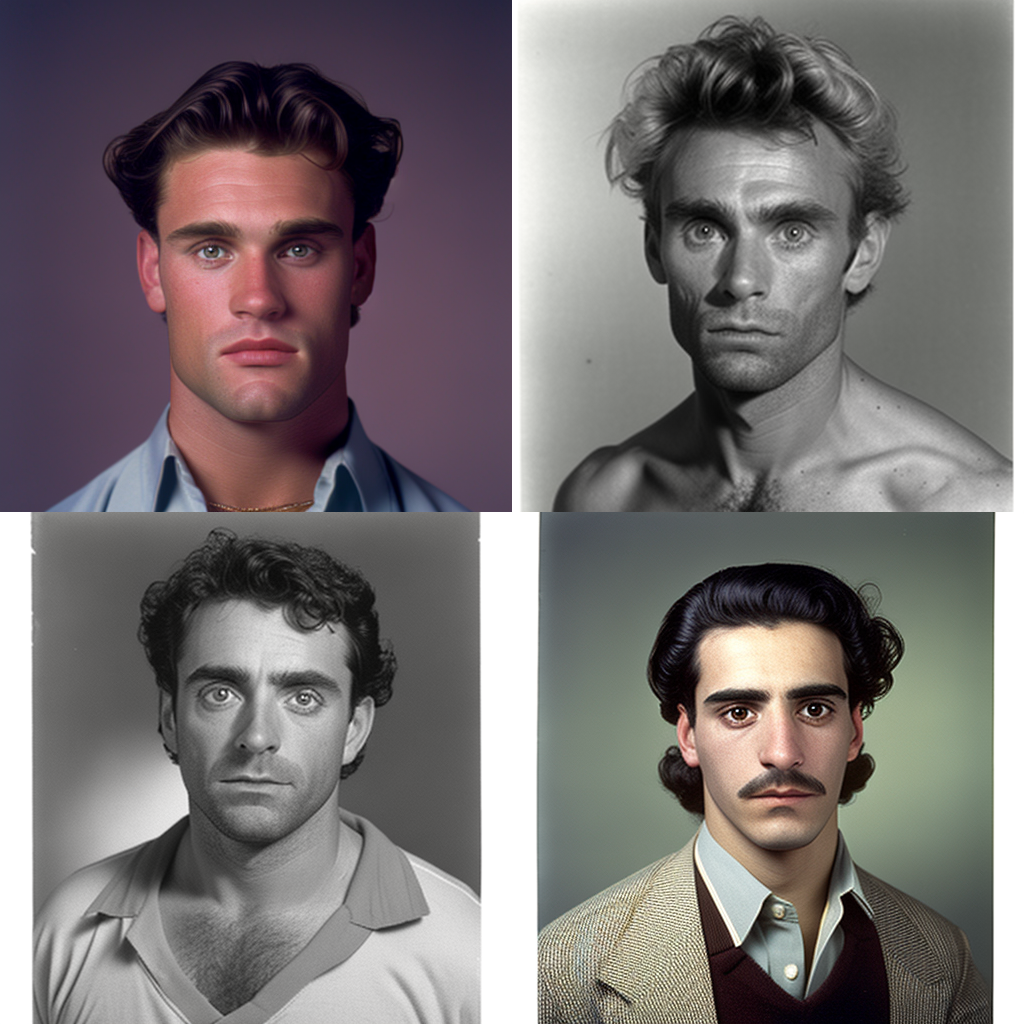
1990s
I think we have gotten some faces that don’t look quite so strongly as “models”. Of course, we are also seeing image artifacts that mimic traditional photography rather than modern digital photography. This trend will continue.
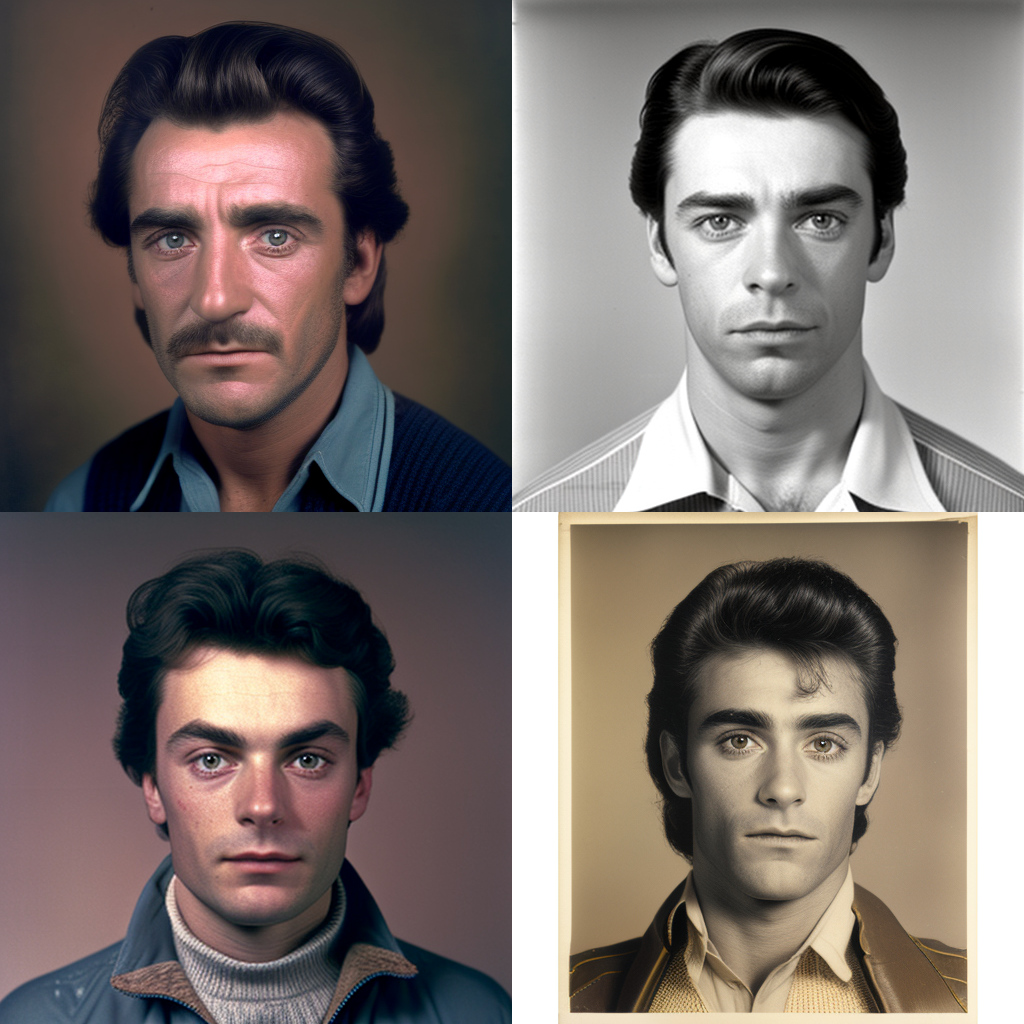
1980s
Hair style and clothing choices start to change. I like the forehead curl in image #4.
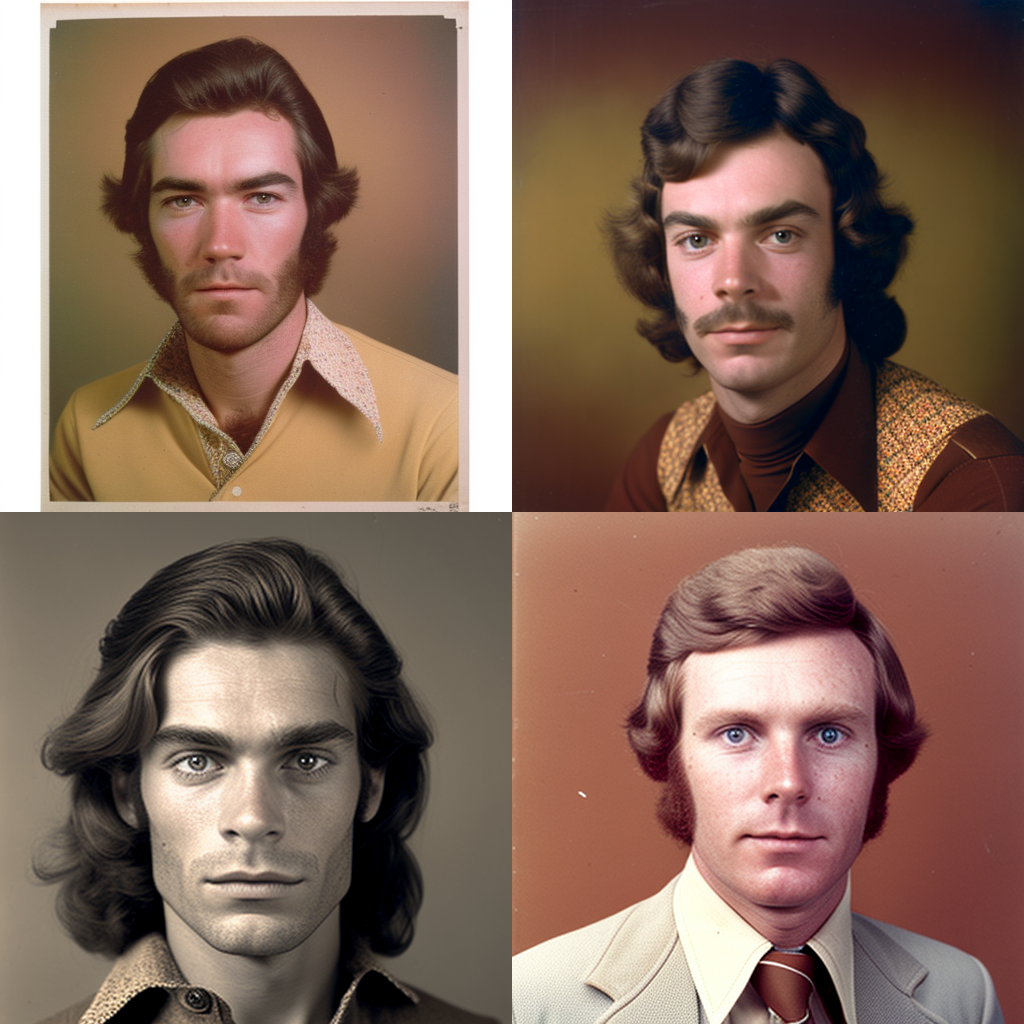
1970s
Disco-era men. This is the first time I get an image of a man with obviously long hair. Side-burns are intoo, apparently.
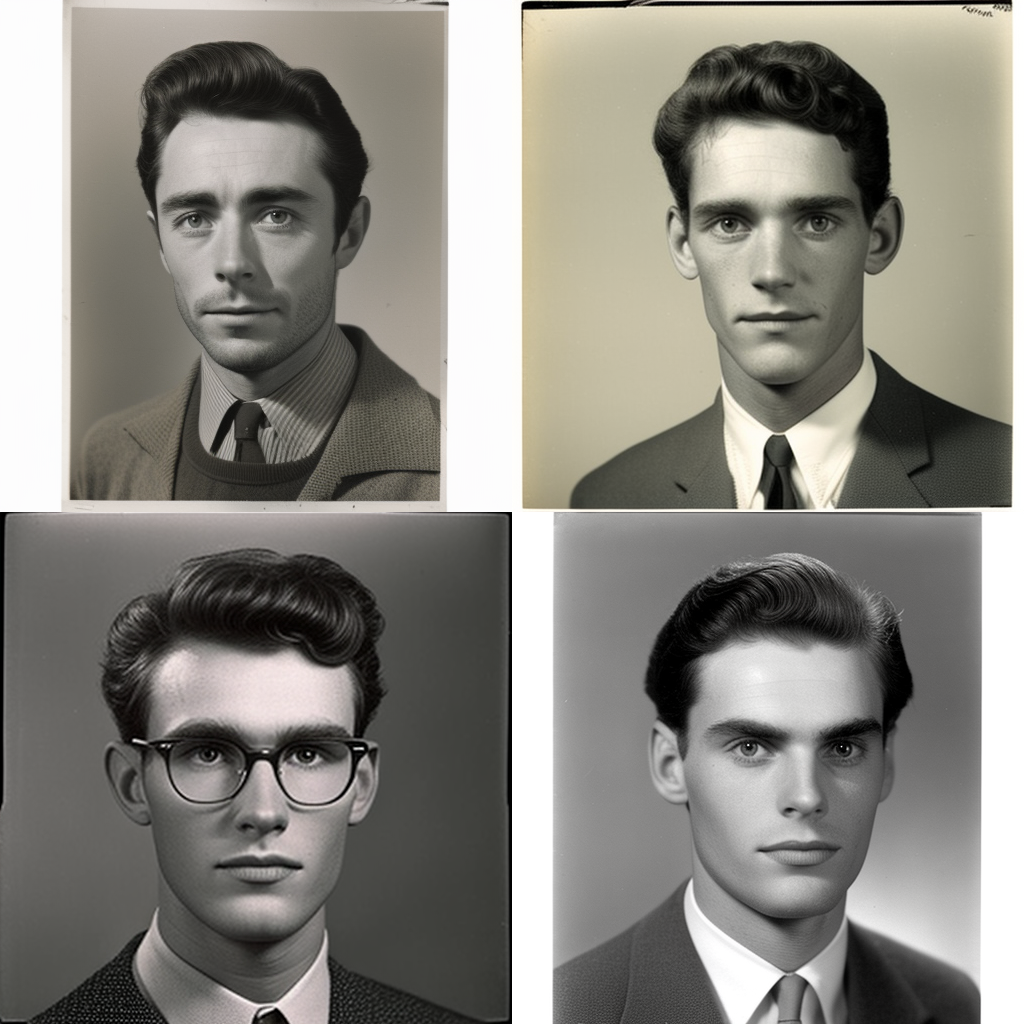
1960s
I was expecting some hippies here, but instead I get what look like pictures from my Dad’s high-school yearbook. Very conservative dress and styling.
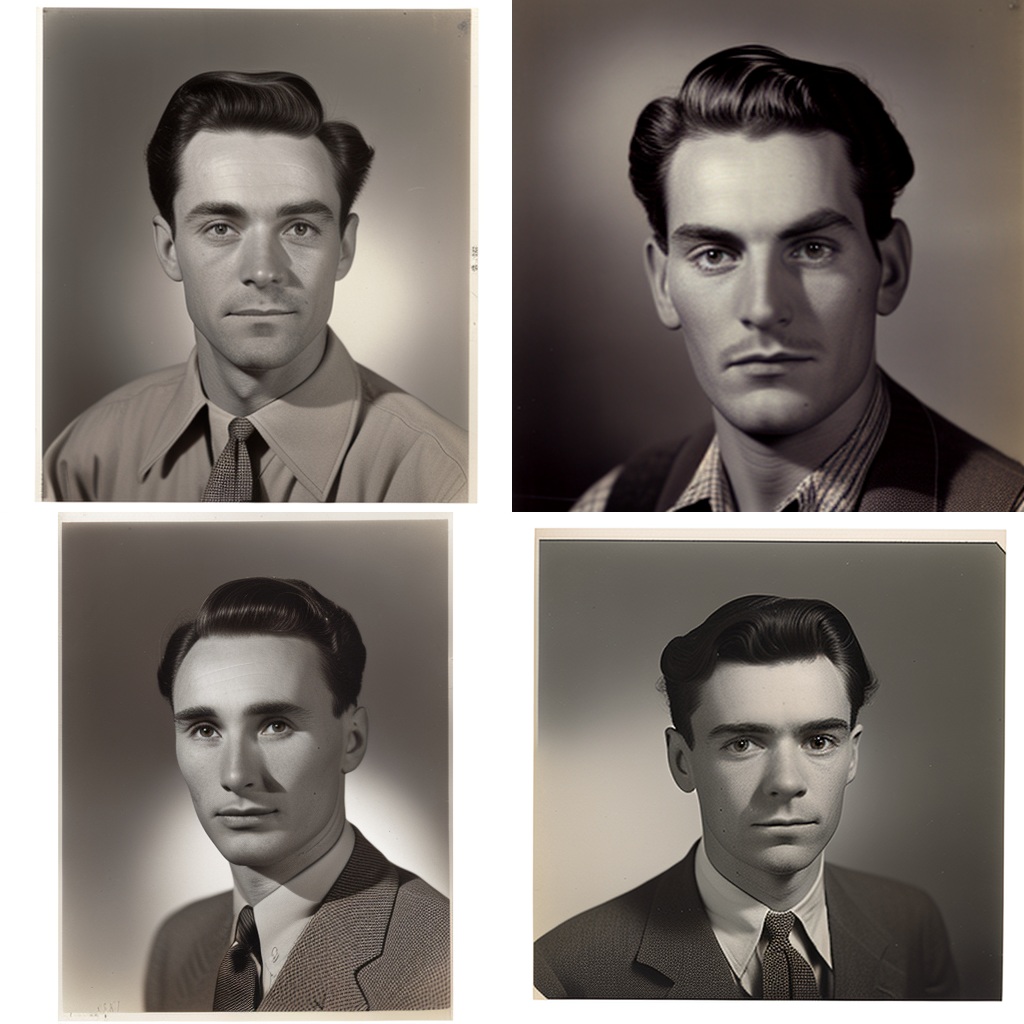
1950s
These guys just look way “cooler” to me than the 1960s guys. More independent and less cookie-cutter.
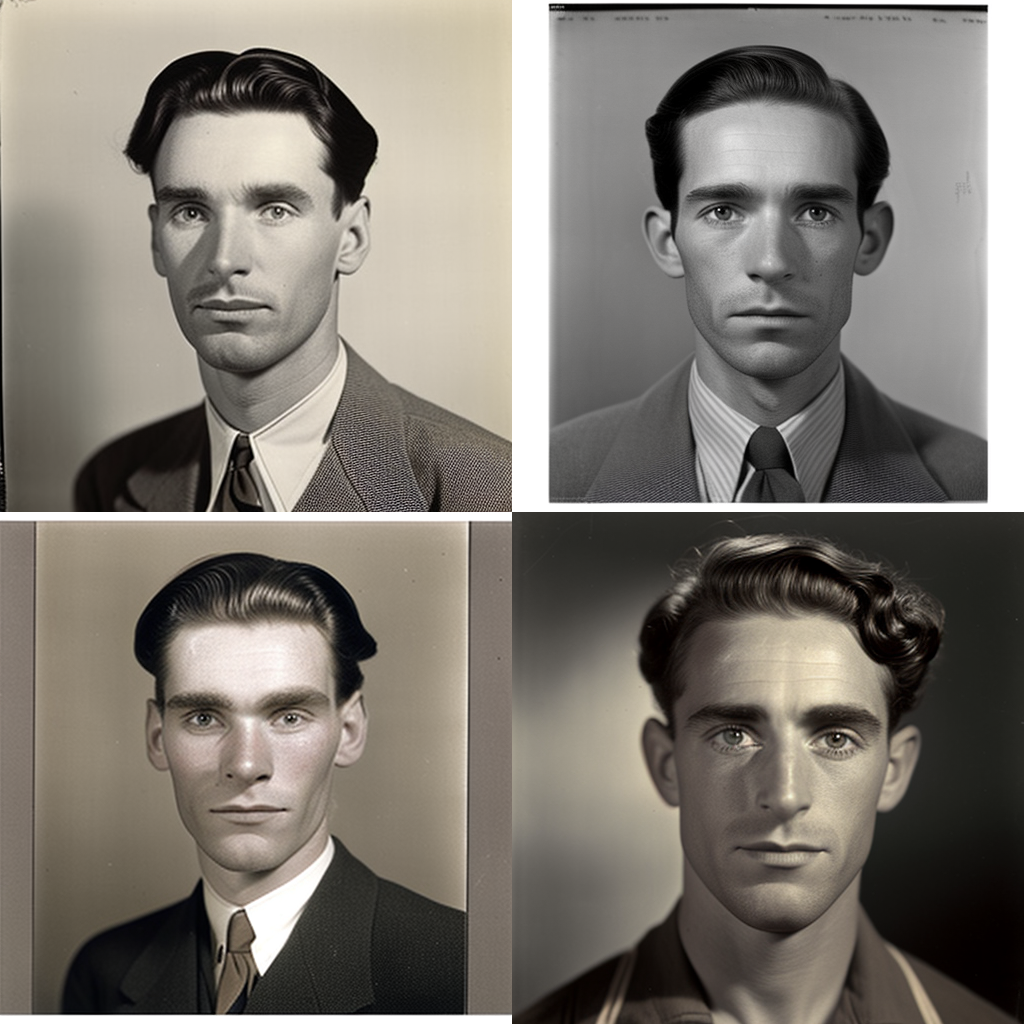
1940s
I had expected to see some military uniforms here due to proximity to WWII service photographs. I guess not.
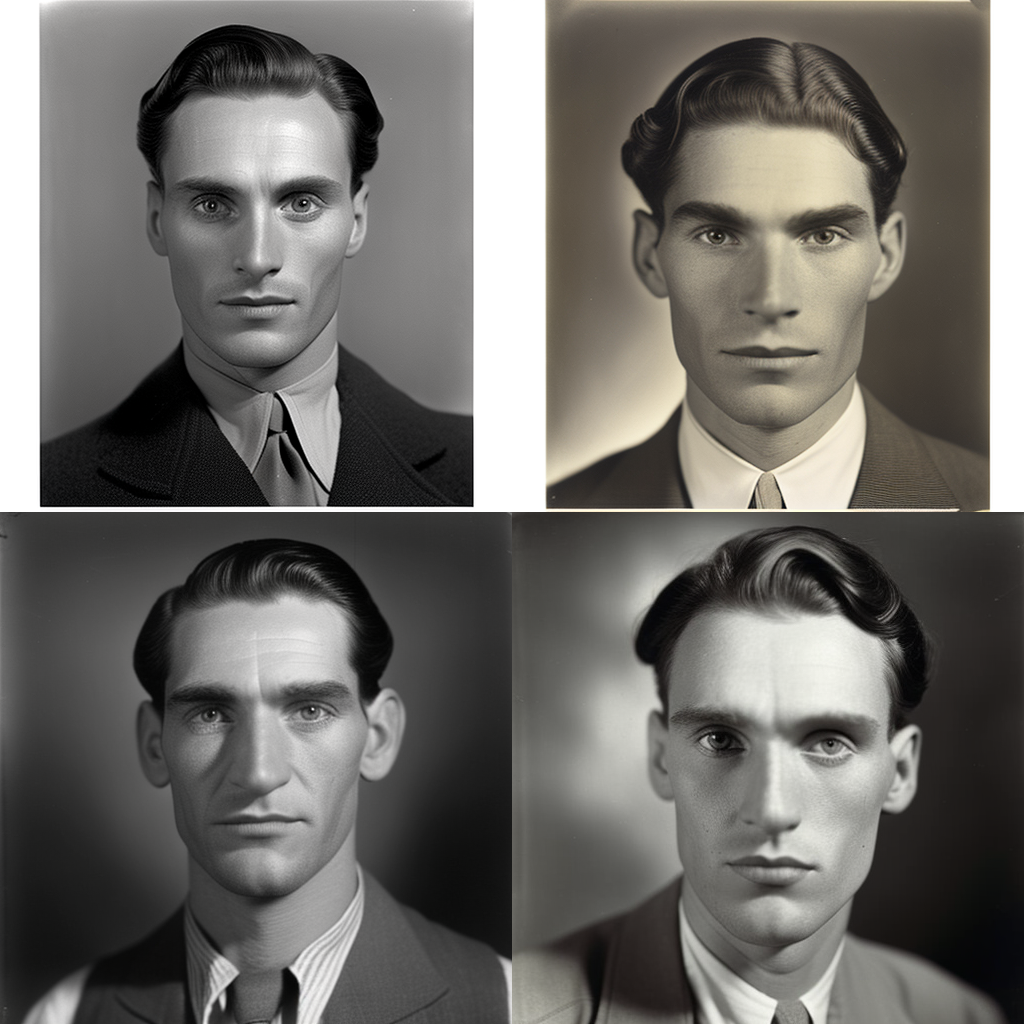
1930s
Difficult to tell much of a difference here. I get a slightly more “European” vibe (of course, all images are dominated by “white” men; not a lot of ethnic or racial diversity).
Taking some bigger time steps:
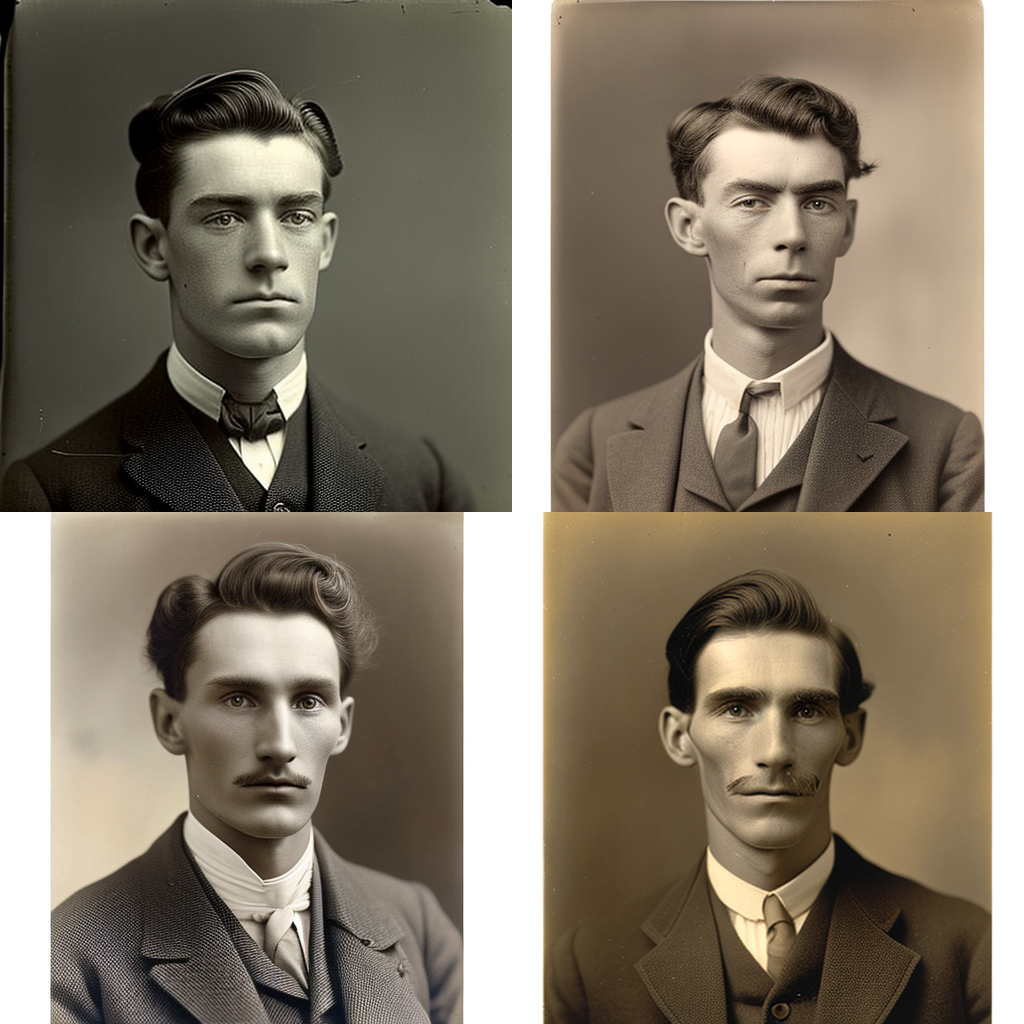
1900s
Some very conservative looking businessmen. Italian? German? Irish?
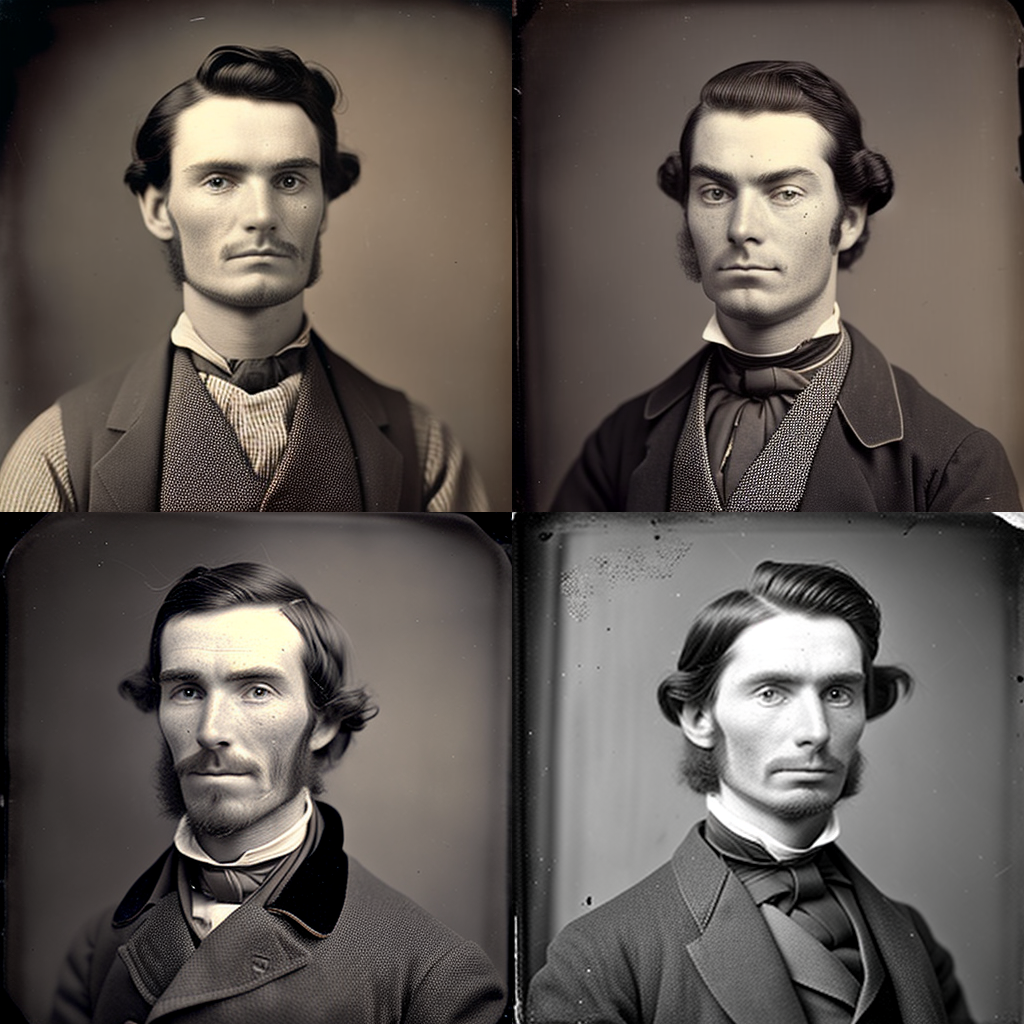
1860s
Some pre-Civil War gentlemen. Don’t they look like “Southern Gentlemen”? I’m not familiar enough to know if typical dress varied between the North and South during this time.
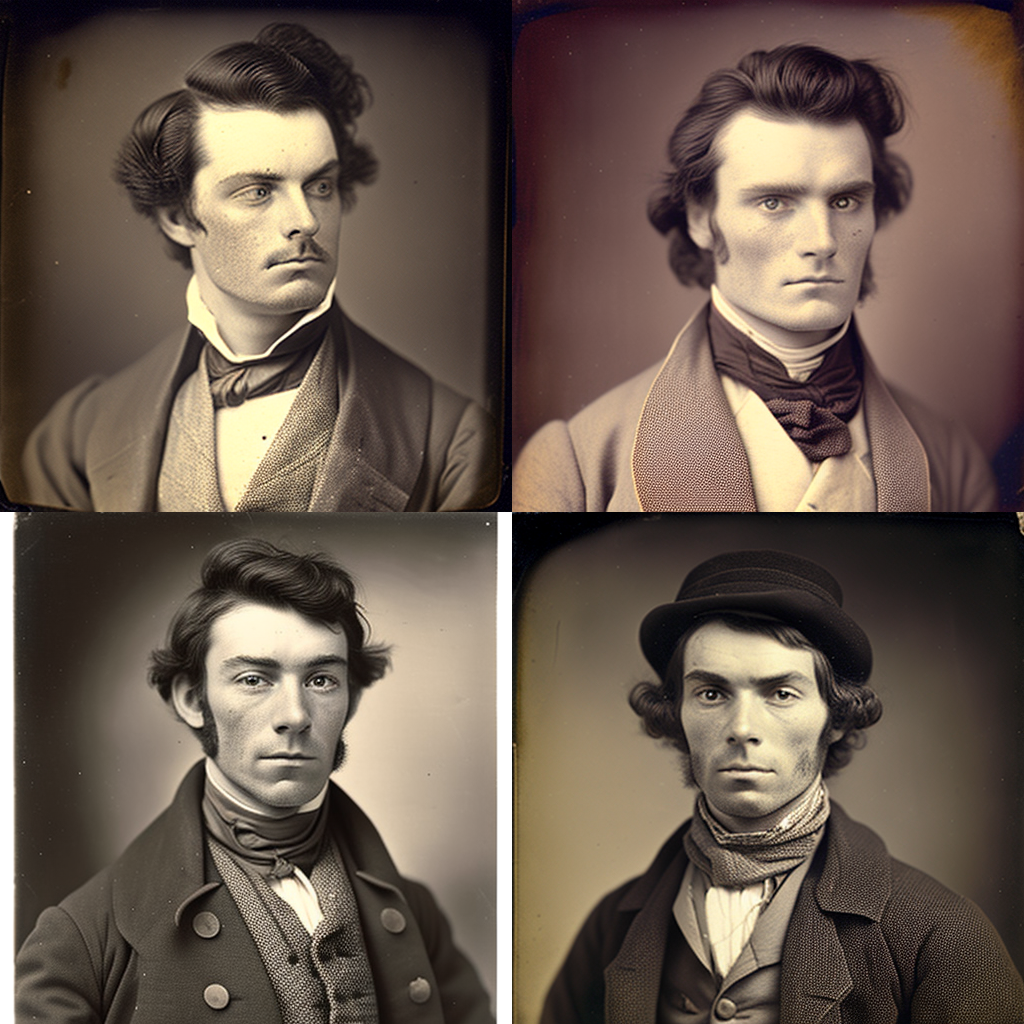
1820s
I think, these guys could be Colonial Americans or British.
As we go further back in time, we venture into the AIs imagination as the photographic process was only invented in the1820s. So I’m not sure what will happen when I ask for pre-1820s photographs.
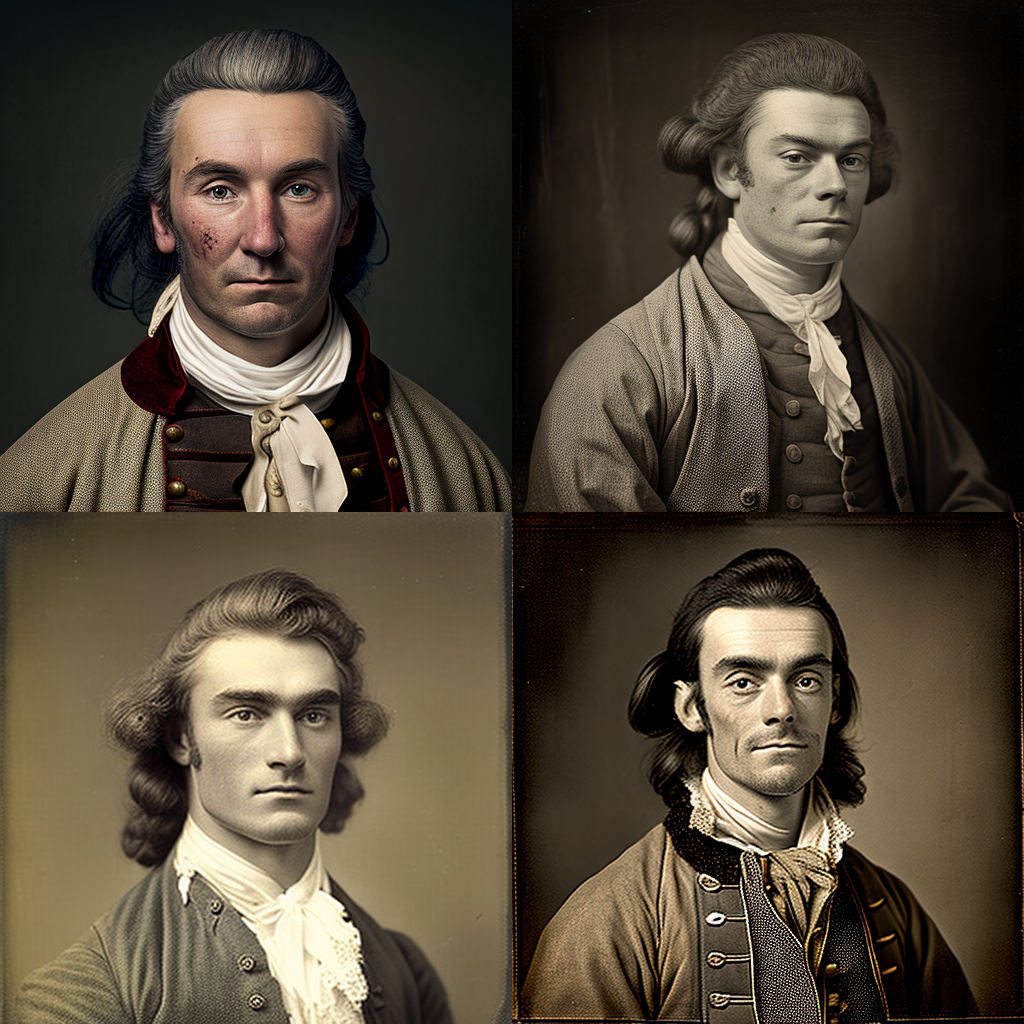
1700s “photograph”
These look like Revolutionary War uniforms and early American outfits (could be typical in Europe as well). What it we ask for a painting, do we get something different?
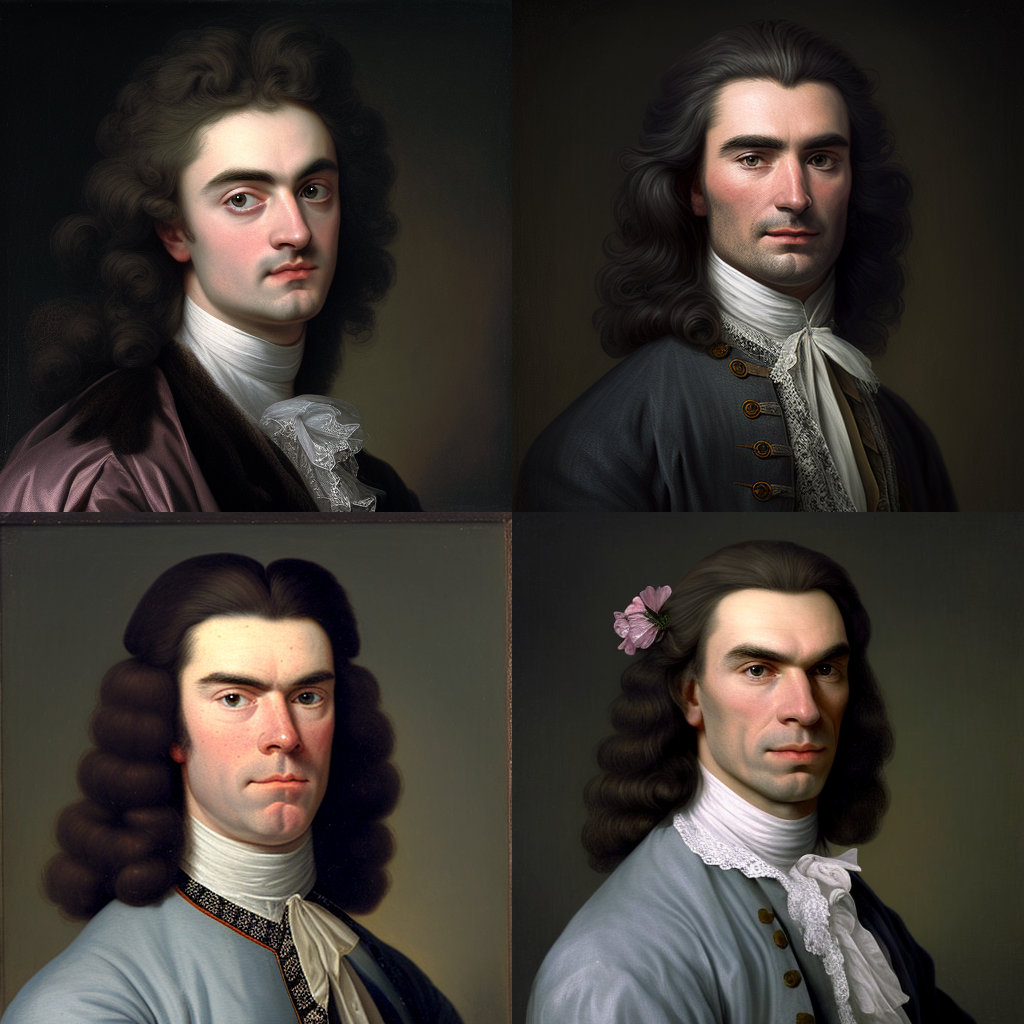
1700s painting
We get some fancier looking “average men”, and more color. I’ll stick with calling all images “photographs”, as MidJourney seems capable of combining a photographic rendering with pre-photographic time periods.
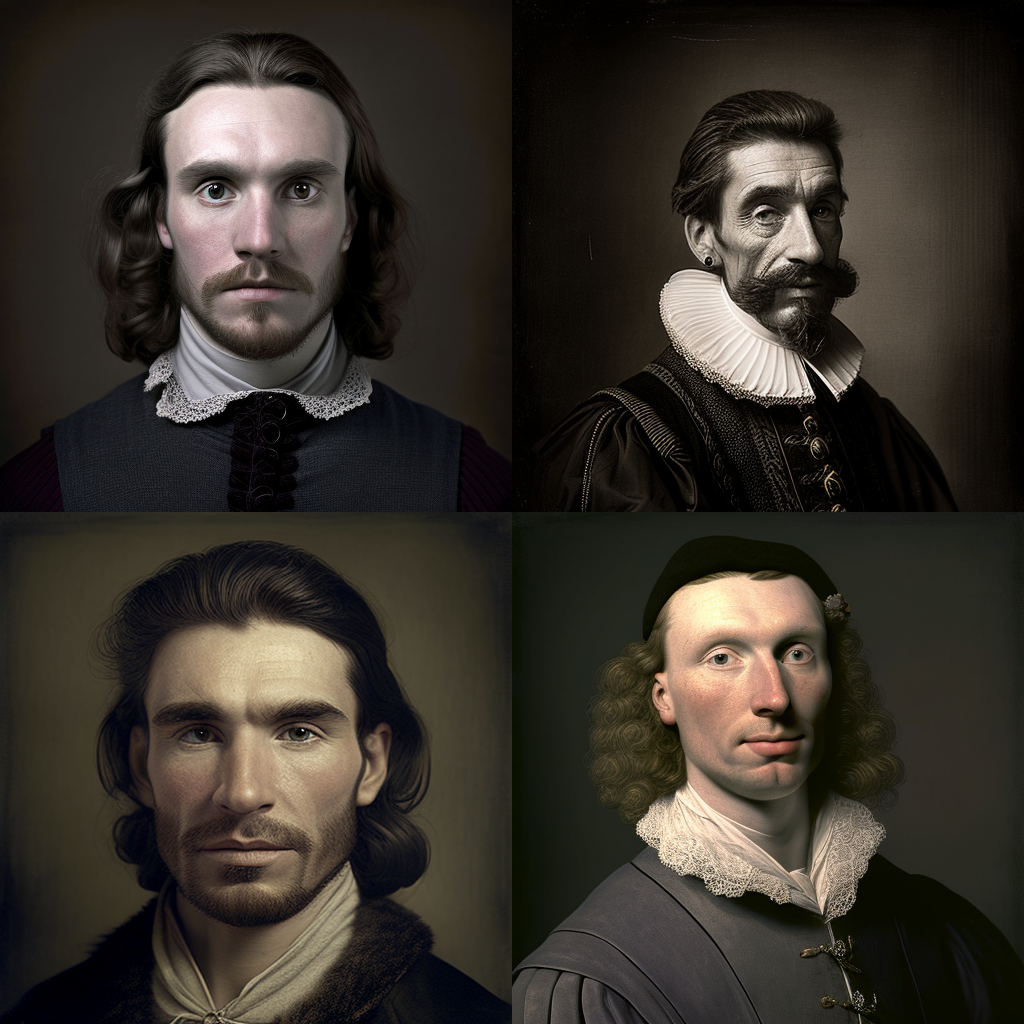
1600s
Some Flemish styling, and perhaps Italian. I note we have the first older looking man presented as “average” here.
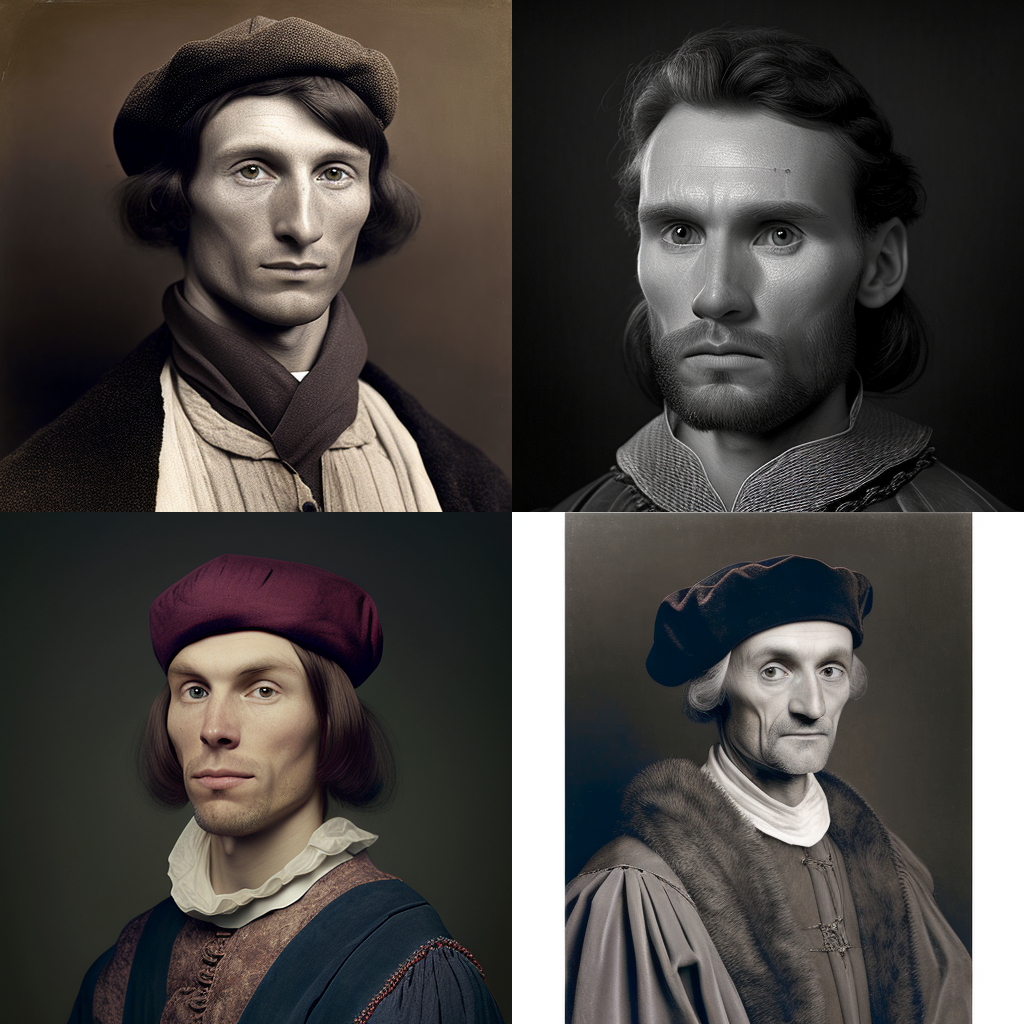
1500s
Definitely Italian looking to my eye. Looks like Renaissance artists or philosophers.
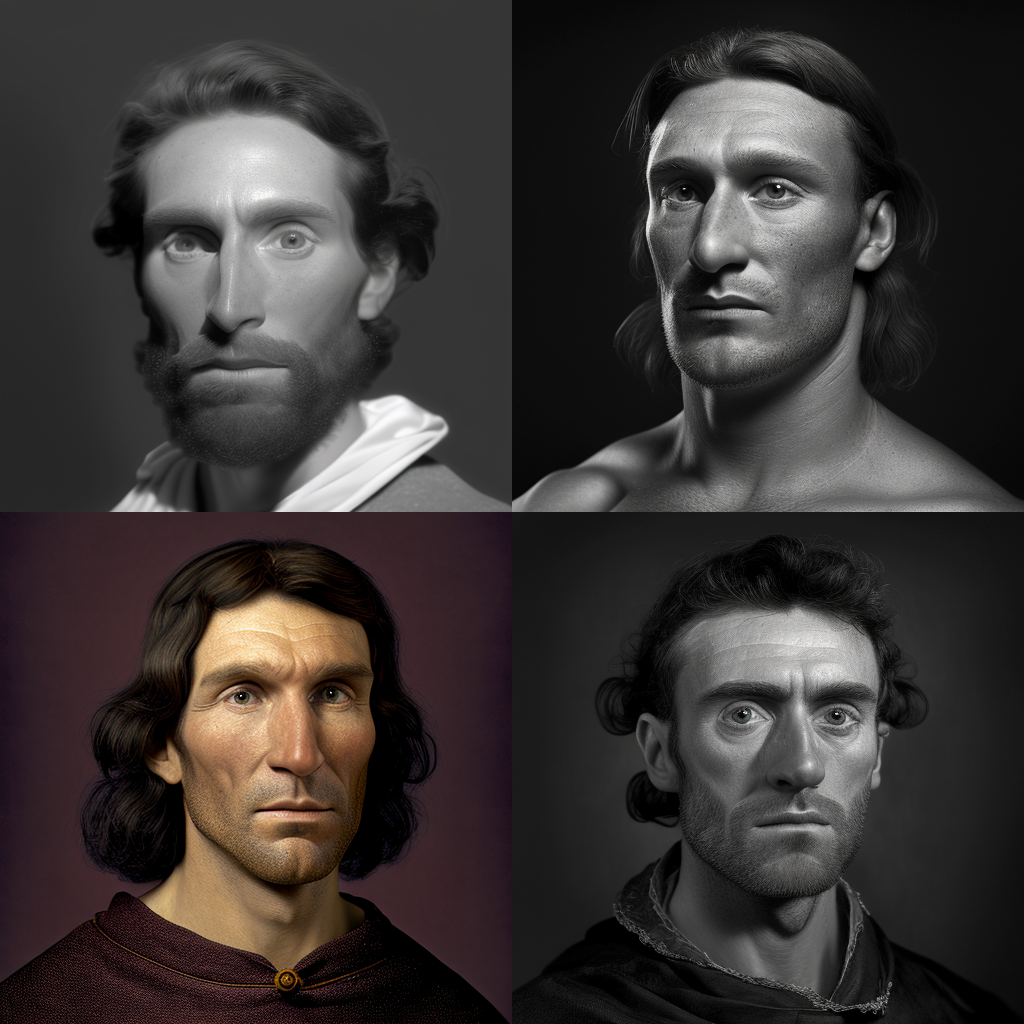
1200s
Very primitive clothing as our representation of what has been (mis-) termed the Dark Ages. Monks?
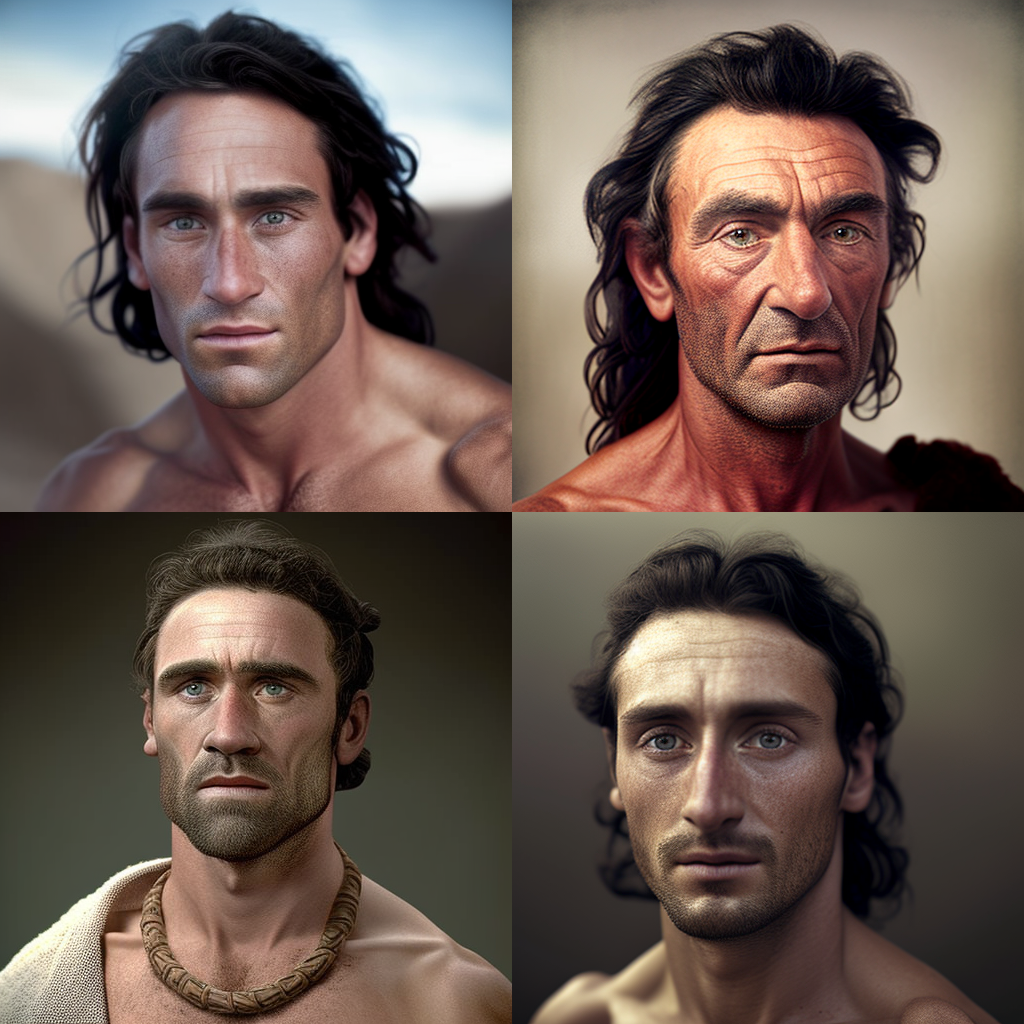
400 BCE
Men from biblical times?
And to push to the extreme:
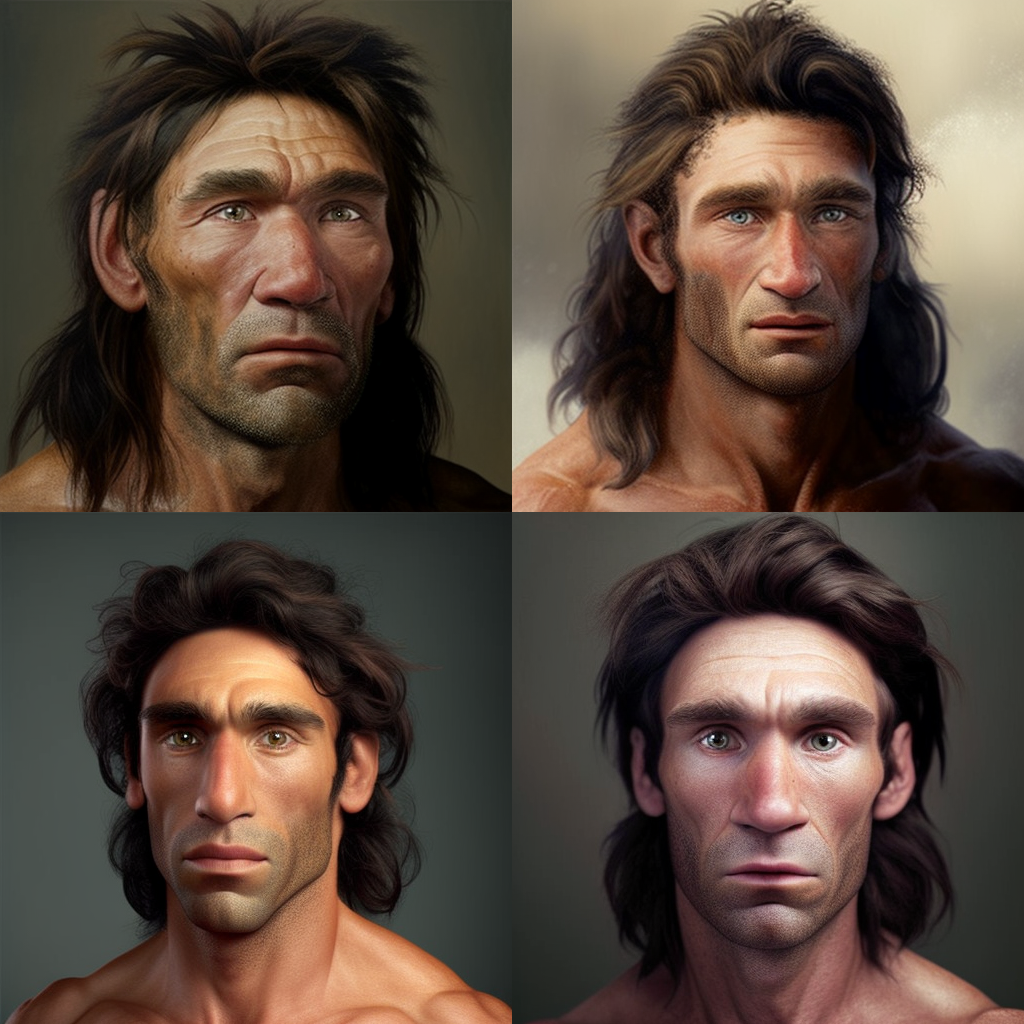
1 million years ago
Maybe even getting some Neandertal features; prominent brow ridge — and no clothing.
Conclusion
It does seem that you can make MidJourney diverge from the canonical image of “average man” by including a year in your prompt. But, it will come along with changes in hair styles and clothing — so it may not fit your purpose.
I do think I am getting more variety and a more interesting group of different looking men by using this technique. So it’s something I will continue to play with as I develop character prompts.
Originally published on Medium on March 1, 2023.